
Open-plan kitchen, dining and living space with renovation work underway and garden views

Renovation Sequencing · 7 min read

Renovate All at Once or in Stages? How to Choose the Right Approach

3 August 2026

Renovating an entire home at once can create a more cohesive result. Completing the work in stages can make the cost and disruption easier to manage.

Neither approach is automatically better. The right choice depends on the property, the available budget, your household and how closely each part of the project is connected.

Even when a renovation will happen over several years, the full strategy should be understood before the first stage begins.

01

When renovating all at once may make sense

A whole-home renovation may be the more practical option in certain conditions.

It often suits properties where:

  • the floor plan is changing significantly
  • plumbing or electrical systems need major work
  • flooring will run throughout the home
  • windows and doors are being replaced
  • several rooms share the same services
  • you can move out during construction
  • finance is available for the full scope
  • the property cannot be comfortably occupied during the work

Completing related work together can reduce duplication and allow builders and trades to coordinate the project more efficiently.
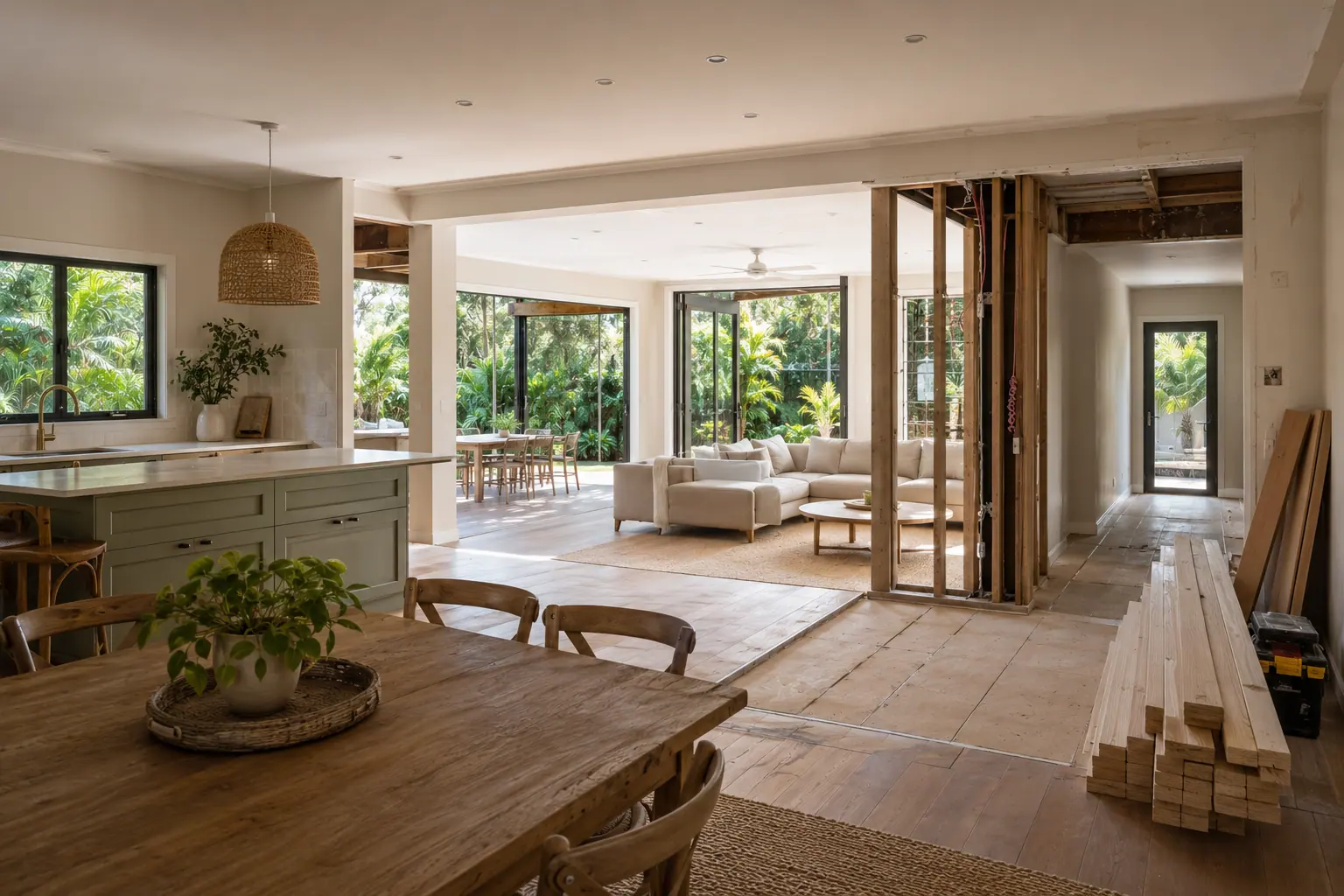

Open-plan kitchen, dining and living space with renovation work underway and garden views

02

When staging the renovation may make sense

A staged approach can suit households that need to spread cost and disruption.

Staging may suit you when:

  • the home remains safe and functional
  • the budget needs to be spread over time
  • the work divides naturally into separate zones
  • you want to live in the home before making every decision
  • some improvements are urgent while others can wait
  • future household needs are still evolving
  • you want to reduce the immediate financial commitment

A staged renovation can be successful, but only when each stage contributes to an agreed final outcome.

Staging should be a planned sequence, not a series of unrelated projects.

03

The risks of renovating without a staging plan

Completing isolated rooms as funds become available can create problems later.

You may:

  • install flooring that eventually needs to be removed
  • renovate a kitchen before changing the adjoining layout
  • complete landscaping before construction access is finished
  • choose finishes that are unavailable for later stages
  • place services where a future extension is planned
  • spend heavily on an area that is later altered again

Staging should be a planned sequence, not a series of unrelated projects.

04

A logical way to stage the work

Most homes benefit from the same broad order.

A workable sequence looks like this:

  • Stage one, investigate and plan: assessment, strategy, measured drawings, engineering advice, approvals, budget and the confirmed floor plan.
  • Stage two, protect the property: roofing, waterproofing, drainage, structural repairs, electrical safety, plumbing and external maintenance.
  • Stage three, complete major structural work: extensions, wall changes, new openings, windows and doors, kitchen or bathroom relocation, decks and outdoor structures.
  • Stage four, renovate connected internal zones: kitchen, living and dining, bedrooms and bathrooms, entry, laundry and storage, outdoor entertaining.
  • Stage five, complete the finishes: painting, flooring, landscaping, window coverings, furniture and final styling.
A completed zone within a staged renovation

05

Consider the hidden costs

The lowest upfront cost is not always the lowest total cost.

Renovating all at once may require a larger upfront investment, temporary accommodation, off-site storage and more decisions within a shorter period. Renovating in stages may involve:

  • repeated site establishment
  • additional call-out or mobilisation costs
  • living through construction more than once
  • price increases over time
  • difficulty matching materials
  • repeated repairs and repainting

Compare the total cost of reaching the finished outcome, not the cost of the first stage alone.

06

Plan around Sunshine Coast conditions

Local climate and site conditions may also influence the sequence.

Consider:

  • wet-season impacts
  • stormwater and drainage
  • heat and sun exposure
  • temporary loss of shade
  • protecting materials from moisture
  • securing the home during external work
  • access around pools and established gardens

These issues should be addressed before deciding which part of the property to open up first.

Decide the full strategy before stage one

Before You Renovate helps Sunshine Coast homeowners establish the whole-property direction, whether the work happens at once or in planned stages.

A strategy can clarify:

  • the final outcome
  • the correct sequence
  • which projects should happen together
  • which decisions must be made early
  • how to avoid redoing work
  • where the budget should be concentrated

Strategy before you spend

Understand the whole plan before the first stage begins.

A Property Strategy Session helps you decide whether to renovate at once or in stages, and in what order the work should happen.

Book a Property Strategy Session